⭐ How to Build a Bedtime Story Routine That Actually Works
Bedtime is one of those moments every parent knows well. Some nights glide by smoothly… and other nights feel like a marathon of “just one more thing.” Kids suddenly need water, a snack, a different stuffed animal, or a deep conversation about the moon. And honestly, who can blame them? Bedtime means the day is ending, and kids are experts at squeezing out every last minute.
In our house, we’ve learned that the calmer the lead‑up, the smoother the bedtime. My wife and I actually use TJKidz stories as something for our daughter to look forward to — almost like a reward for getting ready on time. If the story is fifteen minutes long, we know we need to be brushed, tucked in, and cozy by then. It turns the routine into something predictable and positive instead of a nightly negotiation.
But before we get to the routine itself, there’s something important to talk about — something every parent deals with.
Kids love their screens.
Tablets, shows, games… they’re fun, colorful, and comforting. Screens aren’t “bad,” and they absolutely have their place during the day. But when it comes to bedtime, timing matters. According to the Sleep Foundation, screens close to bedtime can keep the mind alert, making it harder for kids to wind down. It’s not about judgment — it’s simply about understanding how stimulation works. Bright visuals and fast‑paced content wake the brain up at the exact moment we want it to slow down.
That’s where stories come in.
🎧 Why Audio Stories Work So Well at Bedtime
Picture books are wonderful, and reading together is one of the best bonding moments a family can share. But at bedtime, audio stories have a unique advantage.
Here’s why:
They let the eyes rest Kids naturally close their eyes while listening, which helps the body shift into sleep mode.
They spark imagination Without pictures, kids build the world in their minds — a calming, creative process that slows everything down.
They reduce stimulation No bright screens. No page‑turning. Just voice, rhythm, and gentle storytelling.
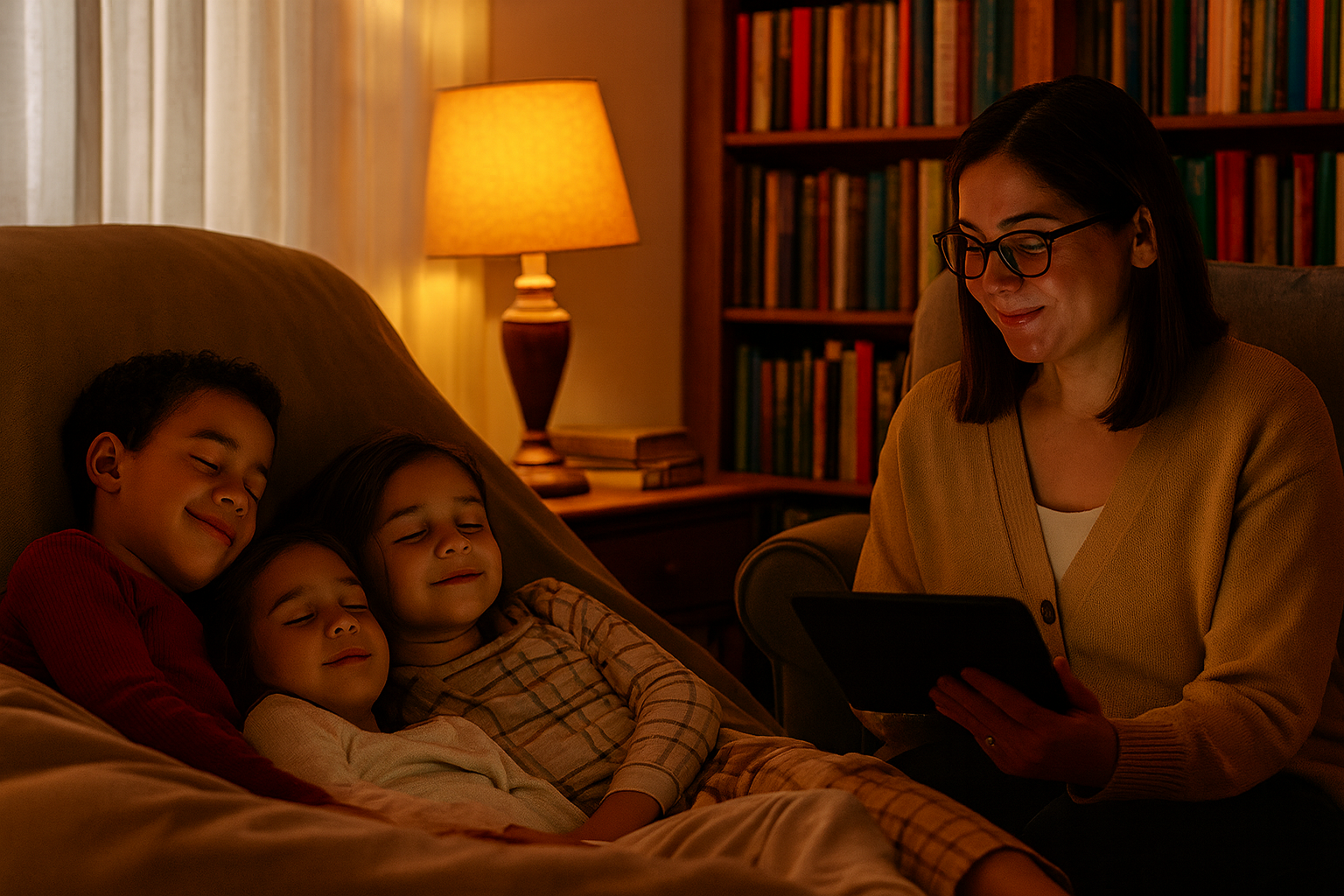
They create a cozy atmosphere Whether it’s a parent reading aloud or a podcast playing softly, the child feels accompanied and safe.
Sometimes kids even drift off before the story ends — and that’s the point.
⭐ A Bedtime Routine That Actually Works
Every family is different, but here’s a simple, flexible routine that helps kids settle in:
Pick a consistent start time Predictability helps kids feel secure.
Optional bath or shower Warm water relaxes the body, but it’s not required.
Dim the lights This signals the brain that it’s time to wind down.
Put screens away Even 30 minutes without screens can make a big difference.
Choose a calming activity Reading, drawing quietly, or listening to a story.
Snuggle in and press play A gentle audio story becomes the final step of the night.
When kids know what to expect, bedtime becomes less about resistance and more about rhythm. And when the last step is curling up with a story, it gives them something to look forward to instead of something to avoid.
⭐ Why This Matters for Families
Bedtime isn’t just a routine — it’s a memory. It’s the moment the day slows down, the moment kids feel safe, the moment connection happens. A simple story can turn a chaotic evening into a peaceful one. And those quiet minutes before sleep? Those are the ones kids remember long after they’ve outgrown bedtime stories.

⭐ Why Audio Stories Are a Superpower for Kids